Business Setup in Dubai: The Complete 2025 Guide for Entrepreneurs
Introduction: Why Dubai is the Global Hub for Business
In the past few decades, Dubai has transformed from a desert trading post into a global business powerhouse.
With its world-class infrastructure, strategic location between East and West, and investor-friendly policies, the city has become the first choice for entrepreneurs, SMEs, and multinational corporations.
If you’re an international entrepreneur asking yourself “How do I start a business in Dubai?” the answer often lies in the city’s Free Zones.
Dubai Free Zones provide:
- 100% foreign ownership
- Zero income tax
- Simplified licensing procedures
- State-of-the-art infrastructure
Whether you’re a startup founder, investor, or established business, Dubai offers a smooth entry point into the Middle East, Africa, and South Asia a market of 2.5 billion+ consumers.
Why Free Zones Exist in Dubai
The concept of Free Zones in Dubai began in 1985 with Jebel Ali Free Zone (JAFZA). It was designed to attract international logistics and shipping companies, leveraging Dubai’s geographic advantage.
The model worked and today, Dubai hosts 30+ specialized Free Zones, each catering to industries like media, healthcare, finance, logistics, IT, and more.
Free Zones are a bridge between global entrepreneurs and the UAE market offering a balance of flexibility, cost-efficiency, and international reach.
Free Zone vs Mainland vs Offshore: Which Is Right for You?
Before setting up a business in Dubai, it’s crucial to understand your three main options:
| Company Type |
Ownership |
UAE Trade Access |
Tax Benefits |
Best For |
| Mainland Company |
Up to 100% (depends on activity) |
Full UAE market |
Subject to UAE corporate tax |
Retail, construction, services needing local market access |
| Free Zone Company |
100% foreign ownership |
Limited direct UAE trade (unless using distributor/dual license) |
0% tax on qualifying income |
Startups, SMEs, international trade, service companies |
| Offshore Company |
100% foreign ownership |
Cannot trade within UAE |
Tax planning advantages |
Asset holding, global trade, IP holding |
Quick Tip: If your goal is international trade, tech startup, or services business, a Free Zone is usually the most practical choice.
Benefits of Business Setup in Dubai Free Zones
- 100% Foreign Ownership
- No need for a local sponsor or Emirati partner.
- Tax Advantages
- 0% corporate tax (on qualifying Free Zone income under new 2023 law).
- 0% personal income tax.
- 0% import/export duties inside Free Zones.
- Full repatriation of profits and capital.
- Quick & Easy Setup
- Business licenses issued within 3–10 working days.
- World-Class Infrastructure
- Offices, warehouses, co-working hubs, and direct access to airports & seaports.
- Industry-Specific Clusters
- Media firms thrive in Dubai Media City.
- Finance companies scale in DIFC.
- Tech startups grow in Dubai Internet City and Silicon Oasis.
- Residency Visas
- Investors and employees get UAE residency visas (with family sponsorship).
- Global Market Access
- Dubai connects you to Middle East, Africa, Europe, and Asia.
Profiles of Major Dubai Free Zones
Jebel Ali Free Zone (JAFZA)
- Focus: Logistics, shipping, manufacturing
- Strength: Next to Jebel Ali Port
- Best For: Import/export, distribution companies
Dubai Multi Commodities Centre (DMCC)
- Focus: Commodities trading (gold, diamonds, tea, coffee)
- Strength: Voted Global Free Zone of the Year multiple times
- Best For: Traders, e-commerce, global service providers
Dubai Airport Free Zone (DAFZA)
- Focus: Aviation, IT, electronics
- Strength: Direct access to Dubai International Airport
- Best For: Air cargo, international logistics firms
Dubai South Free Zone
- Focus: Aviation, logistics, e-commerce
- Strength: Next to Al-Maktoum Airport & Expo 2020 site
- Best For: Startups, e-commerce businesses
Dubai Internet City (DIC)
- Focus: IT, software, tech startups
- Strength: Strong networking, government support
- Best For: Digital platforms, software firms
Dubai Media City (DMC)
- Focus: Media, PR, publishing
- Strength: Hosts CNN, BBC, MBC
- Best For: Media agencies, content creators
Dubai Silicon Oasis (DSO)
- Focus: Tech, electronics, R&D
- Strength: Tech parks, incubators
- Best For: Startups in innovation & R&D
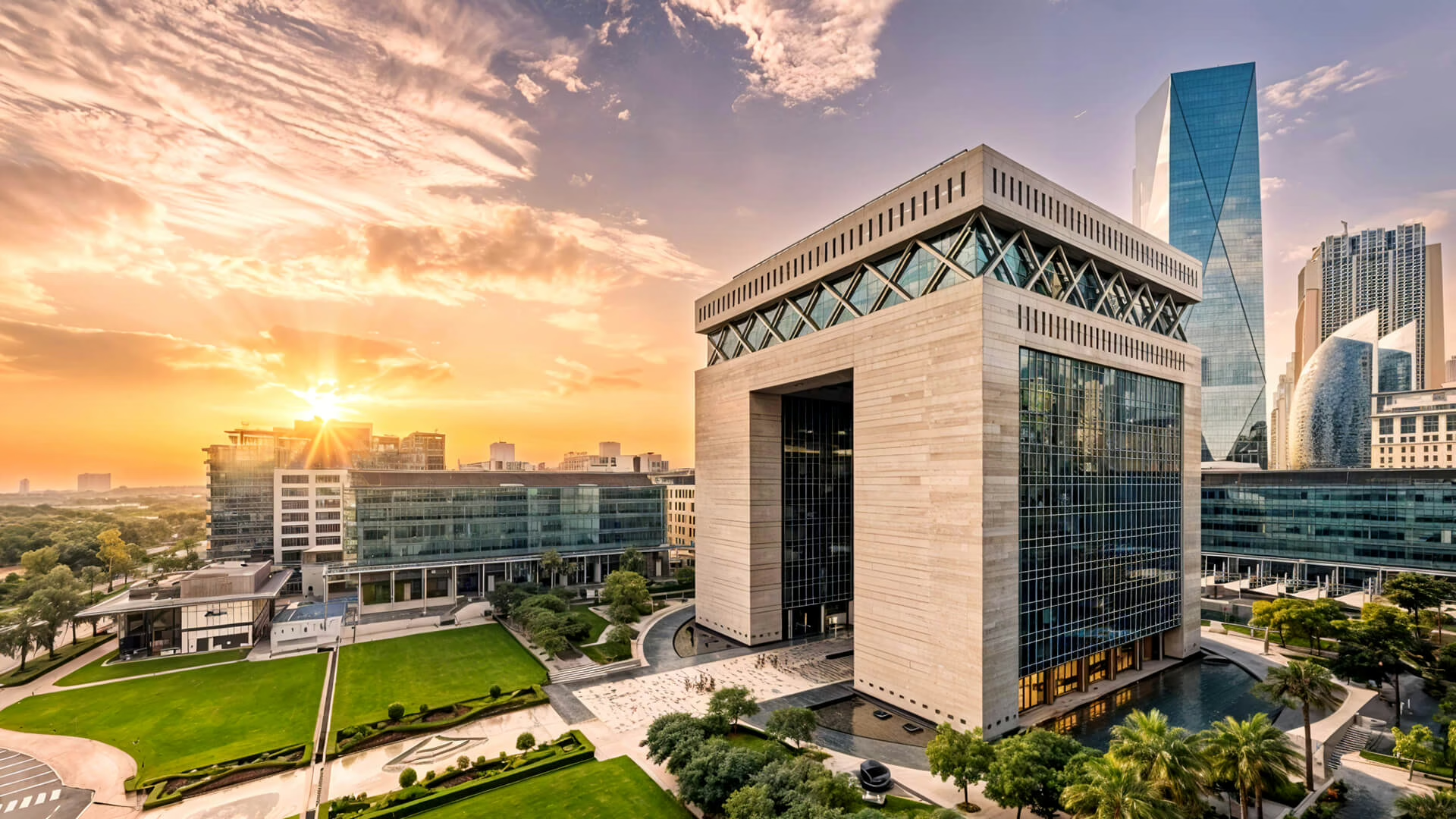
Dubai International Financial Centre (DIFC)
- Focus: Banking, insurance, fintech
- Strength: Own legal system (English common law)
- Best For: Financial institutions, fintech startups
Dubai Healthcare City (DHCC)
- Focus: Healthcare, pharma, medical research
- Strength: Hospitals, clinics, research centers
- Best For: Healthcare and wellness providers
Dubai Design District (d3)
- Focus: Fashion, art, design
- Strength: Creative hub & global fashion events
- Best For: Designers, creative entrepreneurs
Step-by-Step Guide: How to Start a Business in Dubai Free Zone
- Define Your Business Activity (trading, consulting, IT, logistics, manufacturing, etc.)
- Choose the Right Free Zone (industry alignment, costs, location).
- Select a Company Structure (FZE, FZC, or Branch).
- Get Initial Approval (passport, business plan, NOC).
- Choose Office Space (flexi-desk, private office, and warehouse).
- Submit Legal Documents & Pay Fees (MOA, lease agreement, shareholder resolution).
- Receive Business License (valid for 1 year).
- Open a Corporate Bank Account (Emirates NBD, RAKBANK, Mashreq, ADCB).
- Apply for Residency Visas (investor + employees + family).
- Stay Compliant (annual renewals, audits, VAT if applicable).
Timeline: Most Free Zone setups take 2–3 weeks.
Costs of Business Setup in Dubai Free Zones
| Expense |
Average Cost (AED) |
Notes |
| Trade/Service License |
10,000 – 20,000 |
Annual fee |
| Registration/Setup Fee |
5,000 – 10,000 |
One-time |
| Flexi-desk Office |
8,000 – 15,000 |
Yearly |
| Private Office |
20,000 – 50,000 |
Depends on size |
| Visa (per person) |
3,000 – 7,000 |
Includes Emirates ID |
| Share Capital |
10,000 – 50,000 |
Refundable in most Free Zones |
| Miscellaneous |
2,000 – 5,000 |
Legal/admin/translation |
Total First Year Cost: AED 30,000–50,000 (~USD 8,000–14,000).
Taxation in Dubai Free Zones
- Personal Income Tax: 0%
- Corporate Tax (2023 law):
- 0% on qualifying Free Zone income
- 9% on non-qualifying mainland-linked income
- VAT: 5% (mandatory if turnover > AED 375,000/year)
- Customs Duty:
- 0% within Free Zones
- 5% on goods sold to UAE mainland
- Double Taxation Treaties: 135+ agreements worldwide
Compliance & Legal Requirements
- License Renewals: Every year (penalties for late renewal).
- Annual Audits: Required in zones like DMCC, DIFC, DAFZA.
- Employment Laws: Health insurance, end-of-service gratuity, annual leave.
- IP Protection: Strong enforcement in media & design zones.
- Data Protection: DIFC aligns with GDPR standards.
Real Case Studies
- Tech Startup in DSO: Raised $5M funding within 18 months.
- Logistics Firm in JAFZA: Cut shipping costs by 30%.
- Media Company in DMC: Secured Expo 2020 contracts.
Proof that Dubai Free Zones are powerful launch pads for growth.
Conclusion
Dubai is more than just a business destination, it’s a strategic gateway to global trade and investment. With 100% foreign ownership, tax-free benefits, modern infrastructure, and global connectivity, Free Zones make business setup in Dubai faster and easier than ever.
Whether you’re a tech innovator, trader, media creator, or healthcare provider, Dubai offers the ideal ecosystem to scale globally.
Key Takeaways:
- Choose the Free Zone aligned with your business activity.
- Budget realistically (AED 30,000–50,000 first year).
- Stay compliant with renewals, VAT, and audits.
- Leverage Dubai’s location to access 2.5B+ consumers.
In short: Business setup in Dubai is not just about entering the UAE market, it’s about unlocking global opportunities.
30 FAQs About Business Setup in Dubai
General FAQs
Q1. Can foreigners own 100% of a company in Dubai?
Yes, all Dubai Free Zones allow 100% foreign ownership, while certain mainland activities may require a local partner.
Q2. How long does it take to set up a business in Dubai?
On average, 2–3 weeks for Free Zones, and slightly longer for mainland companies depending on approvals.
Q3. What is the easiest way to start a business in Dubai?
Setting up in a Free Zone is usually the fastest and simplest option, with minimal paperwork.
Q4. Do I need to live in Dubai to start a business?
No, but having a UAE residency visa (via your company) makes banking and compliance much easier.
Q5. Can I register a business in Dubai without visiting the UAE?
Yes, many Free Zones allow remote company setup with digital documentation.
Cost & Licensing FAQs
Q6. How much does it cost to start a business in Dubai Free Zones?
Around AED 30,000–50,000 (USD 8,000–14,000) in the first year, depending on license type and office space.
Q7. Are there hidden costs in Dubai Free Zones?
Possible extras include visa deposits, medical tests, bank guarantees, and translation fees.
Q8. Do Free Zones require minimum share capital?
Yes, usually between AED 10,000–50,000, though it is often deposited and then accessible.
Q9. How much is the license renewal fee in Dubai Free Zones?
Almost equal to first-year license costs, typically AED 10,000–20,000 annually.
Q10. Can I combine multiple activities under one license?
Yes, but activities must be related. Otherwise, you may need separate licenses.
Free Zone vs Mainland FAQs
Q11. What’s the difference between Free Zone and Mainland companies in Dubai?
Free Zones offer 100% foreign ownership and tax benefits but limited mainland trade. Mainland allows unrestricted UAE trade but may require local sponsorship.
Q12. Can Free Zone companies sell in the Dubai mainland?
Not directly, you need a local distributor or dual license to operate in the mainland.
Q13. Which is cheaper: Free Zone or Mainland setup?
Free Zones are generally more cost-effective for startups and SMEs.
Q14. Can I convert a Free Zone company into a Mainland company later?
Yes, but it requires restructuring, licensing changes, and additional approvals.
Q15. What is an Offshore company in Dubai?
Offshore entities are used for international trade, asset holding, or tax planning, but cannot do business inside the UAE.
Banking & Finance FAQs
Q16. Why is opening a corporate bank account in Dubai difficult?
Due to strict AML (Anti-Money Laundering) laws, banks require detailed compliance documents.
Q17. Which banks are best for startups in Dubai?
Popular options include RAKBANK, Emirates NBD, Mashreq, and ADCB.
Q18. What is the minimum balance required in UAE corporate accounts?
Usually AED 25,000–50,000 (USD 7,000–14,000). Some banks offer zero-balance SME accounts.
Q19. Can Free Zone companies open international bank accounts?
Yes, but UAE-based accounts are necessary for smooth local transactions.
Q20. Do I need audited financials for banking in Dubai?
Some banks may ask for audited financial statements, especially for trading companies.
Visa & Immigration FAQs
Q21. How many visas can I get with a Free Zone company?
It depends on office space, Flexi-desk = 2–3 visas, larger offices allow more.
Q22. Can I sponsor my family with a Free Zone visa?
Yes, once you hold an investor visa, you can sponsor your spouse, children, and parents.
Q23. Can I hire employees from outside the UAE?
Yes, but you must issue UAE employment visas for them.
Q24. How long does it take to process a Dubai business visa?
Usually 2–3 weeks, including medical test and Emirates ID issuance.
Q25. Do Free Zone companies provide investor visas?
Yes, most Free Zones offer investor visas valid for 2–3 years.
Tax & Compliance FAQs
Q26. Do Free Zone companies in Dubai pay corporate tax?
No, qualifying Free Zone companies pay 0% tax. However, 9% applies on non-qualifying mainland income.
Q27. Do Free Zone companies need to register for VAT?
Yes, if turnover exceeds AED 375,000 annually.
Q28. Are annual audits mandatory for Free Zone companies?
Yes, in zones like DMCC, DIFC, and DAFZA. Others may not require audits.
Q29. What happens if I don’t renew my license?
Your company may face fines, visa cancellations, and even license termination.
Q30. Does Dubai have double taxation treaties?
Yes, the UAE has treaties with over 135 countries, protecting businesses from paying tax twice.