Tax Benefits of UAE Free Zone
Dubai has firmly established itself as the business hub of the Middle East, attracting entrepreneurs, startups, and multinational corporations from all over the world. Known for its visionary leadership, world-class infrastructure, and investor-friendly policies, Dubai provides a unique environment for businesses to thrive.
One of the biggest reasons investors choose Dubai is its Free Zones. These are special economic areas designed to make doing business easier by offering benefits like 100% foreign ownership, zero corporate tax, duty-free imports/exports, and simplified setup processes. Whether you are a solopreneur running an online business or a global company planning regional headquarters, Dubai Free Zones offer tailored solutions to fit your needs.
For global investors, the importance of Free Zones cannot be overstated. They eliminate the need for a local sponsor, provide residency visas for investors and employees, and allow full repatriation of profits and capital. Combined with Dubai’s strategic location connecting Asia, Europe, and Africa, Free Zones have become a preferred gateway for international expansion.
This guide is designed for:
-
Entrepreneurs & Startups looking to launch a cost-effective business.
-
SMEs wanting to scale operations while keeping overheads low.
-
Corporations establishing regional offices or trading hubs.
-
Freelancers & Consultants seeking a legal framework to operate and get visas.
By the end of this guide, you’ll understand exactly why setting up in a Dubai Free Zone can maximize your profits, save taxes, and position your business for long-term growth.
2. Understanding Dubai Free Zones

Before setting up a business in Dubai, it’s essential to understand what Free Zones are and why they have become a cornerstone of the UAE’s economic growth.
What is a Free Zone?
A Free Zone is a designated economic area where businesses enjoy special privileges such as 100% foreign ownership, tax exemptions, and simplified customs procedures. Each Free Zone is governed by its own authority, which issues licenses and sets regulations tailored to the industries it serves.
History & Evolution of Dubai Free Zones
Dubai launched its first Free Zone, Jebel Ali Free Zone (JAFZA), in 1985 to attract international trade and investment. Its success inspired the creation of more than 40 Free Zones across the UAE, each focusing on specific industries — from media, technology, and finance to logistics, healthcare, and e-commerce. Today, Free Zones contribute significantly to Dubai’s GDP and have positioned the city as a global investment magnet.
Role of Free Zones in UAE’s Economic Growth
Free Zones play a critical role in attracting foreign direct investment (FDI) by providing a business-friendly ecosystem. They have:
-
Created hundreds of thousands of jobs.
-
Attracted global companies like Microsoft, Facebook, HP, and Amazon to set up operations.
-
Supported the UAE’s vision of becoming a diversified, innovation-driven economy.
Free Zone vs Mainland vs Offshore – Key Differences
When choosing where to set up your business, it’s important to understand the distinctions:
| Aspect |
Free Zone |
Mainland |
Offshore |
| Ownership |
100% Foreign Ownership |
Local Sponsor (51%) required (except certain activities after 2021 reforms) |
100% Foreign Ownership |
| Market Access |
Can trade internationally & within Free Zone |
Full access to UAE market |
No direct UAE market access |
| Taxes |
0% Corporate & Personal Tax |
Subject to UAE corporate tax |
0% Tax |
| Setup Cost |
Flexible, cost-effective |
Usually higher |
Low |
| Physical Office |
Optional (Flexi-desk available) |
Mandatory |
Not required |
For most foreign entrepreneurs, Free Zones offer the best balance of ownership control, cost-efficiency, and ease of setup. They are particularly ideal for international trade, service providers, tech startups, and freelancers who want a UAE base without heavy restrictions.
3. Benefits of Setting Up a Business in Dubai Free Zones
Dubai Free Zones are designed to maximize business efficiency and profitability. Whether you’re a startup, SME, or multinational corporation, setting up in a Free Zone offers several unmatched advantages that help you grow faster while keeping operational costs low.
1. 100% Foreign Ownership
Unlike mainland companies (where local sponsorship was previously required), Free Zones allow 100% foreign ownership. This means you have complete control over your company’s decision-making, profits, and future expansion strategies without sharing equity with a local partner.
2. Zero Income & Corporate Tax
One of the biggest attractions of Dubai Free Zones is their tax-free environment. Businesses enjoy:
-
0% corporate tax on profits (subject to maintaining compliance with Free Zone regulations).
-
No personal income tax on salaries or dividends.
-
Exemption from import and export duties on goods traded within the Free Zone.
This enables businesses to maximize profits and reinvest more capital into growth.
3. Full Repatriation of Profits and Capital
Free Zone entities can repatriate 100% of profits and capital to their home country with no restrictions. This is a major advantage for foreign investors who want to keep their funds liquid and accessible.
4. Strategic Global Location
Dubai sits at the crossroads of Europe, Asia, and Africa, making it a natural trade hub. Free Zone businesses benefit from world-class airports, seaports, and logistics networks, giving them access to over 2 billion consumers within a 4-hour flight radius.
5. World-Class Infrastructure & Logistics
Free Zones offer state-of-the-art infrastructure including:
-
Modern office spaces, warehouses, and industrial units.
-
Advanced communication and IT networks.
-
Seamless logistics and customs clearance services.
This ensures smooth operations for businesses in manufacturing, import/export, and e-commerce.
6. Industry-Specific Hubs
Each Free Zone is designed with a focus on a specific industry — e.g., Dubai Internet City for IT, Dubai Media City for creative industries, and JAFZA for logistics and trade. This clustering provides a strong business ecosystem, networking opportunities, and government support.
7. Fast & Easy Business Setup
Free Zones are known for their streamlined procedures. You can often get your license in a few days with minimal paperwork, making it easy to start operating quickly.
8. Residency Visa & Family Sponsorship
Free Zone companies can apply for investor visas, employee visas, and family sponsorships, making it easier to relocate staff and loved ones to Dubai.
4. Types of Free Zones in Dubai
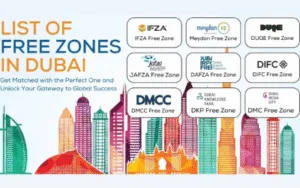
Dubai is home to more than 30 Free Zones, each designed to cater to specific industries and business needs. Choosing the right Free Zone is crucial for maximizing tax benefits, reducing costs, and ensuring compliance with your business activity.
4.1 General Trading & Commercial Free Zones
If your goal is to engage in import-export, wholesale trading, or distribution, these Free Zones are perfect:
-
Dubai Multi Commodities Centre (DMCC): Known as the world’s No. 1 Free Zone, DMCC is ideal for trading companies dealing in commodities like gold, diamonds, tea, coffee, and more.
-
Dubai South Free Zone: Strategically located near Al Maktoum International Airport, this Free Zone is excellent for logistics, aviation, and e-commerce businesses.
-
Dubai Airport Free Zone Authority (DAFZA): Perfect for international companies needing proximity to Dubai International Airport for quick cargo and shipment operations.
4.2 Media & Technology Free Zones
Dubai has invested heavily in becoming a regional hub for media, IT, and innovation. Key Free Zones include:
-
Dubai Media City (DMC): Home to global media companies, advertising agencies, broadcasters, and production studios.
-
Dubai Internet City (DIC): The go-to destination for IT companies, software developers, and startups in AI, blockchain, and cloud computing.
-
Dubai Silicon Oasis (DSO): A technology park offering incentives for electronics manufacturing, R&D, and tech-focused businesses.
4.3 Financial & Professional Service Free Zones
For financial institutions, consulting firms, and professional services, these Free Zones provide an internationally regulated environment:
-
Dubai International Financial Centre (DIFC): A globally recognized financial hub with its own legal system and courts based on English Common Law.
-
Dubai World Trade Centre (DWTC): Ideal for companies seeking flexible event spaces, short-term licensing, and access to global exhibitions.
4.4 Industry-Specific Free Zones
Certain industries have dedicated Free Zones that provide customized infrastructure and support:
-
Jebel Ali Free Zone Authority (JAFZA): Specializes in shipping, logistics, and industrial activities near the Jebel Ali Port.
-
Dubai Healthcare City (DHCC): A medical and wellness hub with hospitals, clinics, and research facilities.
-
Dubai Design District (d3): Tailored for fashion designers, architects, and creative businesses.
By understanding these categories, investors can align their business activity with the right Free Zone, reducing compliance issues and maximizing operational efficiency.
5. Choosing the Right Free Zone for Your Business
With over 30+ Free Zones in Dubai, choosing the right one can seem overwhelming — but making the correct decision will save you money, time, and compliance headaches later. The right Free Zone will depend on your business activity, target market, and budget.
Key Factors to Consider
-
Nature of Business Activity
-
Each Free Zone is designed for specific sectors — for example, DMCC is ideal for trading, DIC is perfect for IT companies, and d3 is for creative businesses.
-
Check if your chosen Free Zone allows your activity, as some have restrictions on certain industries (e.g., healthcare activities must go through DHCC).
-
Budget & Setup Cost
-
Free Zones vary widely in cost. Some, like IFZA and Meydan, offer affordable packages for startups and freelancers, while others like DIFC cater to premium corporate clients.
-
Consider annual license fees, office rental costs, visa quota charges, and renewal fees.
-
Office Space Requirements
-
Free Zones offer a range of options — from virtual offices and flexi-desks to full-fledged office spaces and warehouses.
-
If you need physical inventory storage or frequent client meetings, choose a Free Zone that provides scalable office or warehouse facilities.
-
Target Market (Local vs. International)
-
If you plan to sell directly in the UAE mainland, you may need a local distributor or obtain a dual license in certain Free Zones.
-
For businesses focusing on global markets (import/export, e-commerce, consulting), a Free Zone setup is ideal with no local partner requirement.
-
License Category Availability
-
Not all Free Zones offer every license type. For example, some Free Zones don’t provide industrial licenses or manufacturing permissions.
-
Make sure your Free Zone offers the exact license you need — trading, professional, e-commerce, or industrial.
Comparison Table of Major Free Zones
| Free Zone |
Best For |
Key Benefits |
| DMCC |
Commodity & General Trading |
0% corporate tax, global reputation, large business network |
| Dubai South |
Logistics, Aviation, E-commerce |
Near airport, cost-effective setup, flexible offices |
| DAFZA |
International Trading & Imports |
Proximity to DXB Airport, fast customs clearance |
| DIC |
IT, Software, AI, Blockchain |
Networking with tech giants, innovation hub |
| DMC |
Media, Advertising, PR |
Creative ecosystem, global media companies |
| DIFC |
Financial Services |
International legal framework, top-tier business address |
| d3 |
Fashion, Art, Design |
Creative community, event opportunities |
By considering these factors and comparing Free Zones carefully, you can choose the most cost-effective and strategically beneficial location for your company. Many entrepreneurs also work with business setup consultants in Dubai to navigate Free Zone selection and ensure compliance.
6. Business Activities Allowed in Dubai Free Zones
Dubai Free Zones are designed to accommodate a wide range of business activities, making them attractive for entrepreneurs, startups, and global corporations. Whether you are into trading, services, manufacturing, or digital business, there is a Free Zone tailored to your needs.
1. Trading Activities
Trading is one of the most popular activities in Free Zones. You can engage in:
-
Import & Export of goods globally with minimal restrictions.
-
General Trading, allowing multiple product categories under one license.
-
Specialized Trading, e.g., foodstuff, electronics, auto parts, or textiles.
Free Zones like DMCC, JAFZA, and DAFZA are considered global hubs for trade, with seamless customs clearance, proximity to ports, and duty exemptions that maximize profits.
2. Professional & Service Activities
If you are offering services instead of physical products, Dubai Free Zones offer Service Licenses for:
-
Business consultancy, IT consulting, legal advisory
-
Accounting, auditing, tax consultancy
-
HR, recruitment, and training services
-
Design, architecture, and engineering consultancy
Free Zones like DWTC, DIFC, and IFZA are perfect for professional service firms, offering world-class office spaces and access to a premium corporate network.
3. Industrial & Manufacturing Activities
Dubai is not just for trading — it is also an industrial hub. Free Zones like JAFZA and Dubai Industrial City provide:
-
Warehouses, factories, and land for industrial operations
-
Support for light manufacturing, packaging, and assembly
-
100% foreign ownership of manufacturing facilities
-
Easy access to global supply chains via Jebel Ali Port
This is ideal for businesses in food processing, construction materials, automotive components, and consumer goods manufacturing.
4. E-commerce Businesses
Dubai Free Zones encourage digital entrepreneurship by offering E-commerce Licenses, enabling businesses to:
-
Run online stores selling locally and internationally
-
Manage multiple payment gateways and logistics partners
-
Operate without a physical retail shop
Free Zones like Dubai CommerCity and Meydan Free Zone are built specifically for e-commerce businesses with ready-to-use warehouses and integrated fulfillment solutions.
5. Media & Creative Activities
Dubai is home to a thriving media and creative industry. Free Zones like DMC, d3, and Dubai Studio City allow businesses to engage in:
-
Media production, filmmaking, and broadcasting
-
Digital marketing, PR, advertising agencies
-
Fashion design, art studios, and event management
These zones offer access to a global creative community and networking events.
6. Logistics & Shipping Activities
For businesses dealing with freight forwarding, supply chain management, or courier services, Dubai Free Zones like Dubai South and JAFZA provide:
-
State-of-the-art logistics infrastructure
-
Bonded warehouses and storage solutions
-
Access to Dubai Airports and Jebel Ali Port for global distribution
7. Healthcare & Wellness Services
Free Zones like Dubai Healthcare City (DHCC) are dedicated to medical and wellness businesses. You can open:
-
Clinics, diagnostic labs, pharmacies
-
Wellness centers, physiotherapy, and alternative medicine practices
-
Medical research facilities and training centers
8. Freelancing Permits
For independent professionals, Dubai Free Zones offer Freelance Permits that allow you to legally offer services under your own name. Popular categories include:
-
IT specialists, developers, designers
-
Photographers, filmmakers, writers
-
Trainers, coaches, and consultants
By aligning your business activity with the right Free Zone, you can save on costs, meet regulatory requirements easily, and maximize growth opportunities.
7. Types of Licenses in Dubai Free Zones
When setting up your company in Dubai Free Zones, choosing the right business license is one of the most important steps. Your license defines what activities you are legally allowed to carry out. Each Free Zone offers several license categories tailored to different business models.
Below is a complete breakdown of the most common Free Zone licenses and who they are best suited for:
1. Trade License
A Trade License (sometimes called a Commercial License) is the go-to option for businesses engaged in import, export, distribution, and trading of goods.
With this license, you can:
-
Import and export products globally
-
Distribute goods within the UAE (via local distributors for mainland market access)
-
Hold inventory in Free Zone warehouses
Best for: General traders, wholesalers, retailers, and e-commerce businesses with physical products.
Popular Free Zones for trading include DMCC, JAFZA, and DAFZA, thanks to their strategic port and airport connectivity.
2. Service License
A Service License allows businesses to provide professional or specialized services rather than trading goods.
Activities under this license include:
-
Business consulting, marketing, IT solutions
-
HR, training, and recruitment agencies
-
Legal, accounting, and auditing firms
-
Engineering, architecture, and design services
Best for: Service-based businesses, consultants, and agencies looking to operate legally and issue invoices.
Free Zones like DWTC, IFZA, and Dubai Internet City are ideal for service businesses thanks to their modern office setups and strong business communities.
3. Industrial License
An Industrial License is required if you plan to manufacture, assemble, or process products in Dubai Free Zones.
Benefits of this license include:
-
Access to warehouses, factories, and land plots
-
Permission to import raw materials duty-free
-
Ability to export finished products globally
Best for: Businesses in food processing, light manufacturing, packaging, or automotive assembly.
JAFZA and Dubai Industrial City are major hubs offering excellent industrial infrastructure.
4. Freelance Permit
Dubai Free Zones also offer Freelance Permits, which allow independent professionals to operate under their personal name.
Covered sectors include:
-
Media & creative work (photographers, designers, filmmakers)
-
IT specialists (developers, coders)
-
Education & training professionals
Best for: Individuals who want flexibility without forming a full company.
Free Zones like Dubai Media City and GoFreelance (TECOM) offer affordable freelance permits with visa options.
5. E-commerce License
The E-commerce License is specifically designed for online businesses that sell products or services through websites or digital platforms.
With this license, you can:
-
Manage an online store legally
-
Partner with logistics companies for delivery
-
Operate without a physical retail outlet
Best for: Online entrepreneurs, dropshippers, and startups.
Free Zones like Dubai CommerCity and Meydan Free Zone specialize in e-commerce solutions.
6. Dual License (Free Zone + Mainland)
Some Free Zones offer a Dual License, allowing businesses to operate both within the Free Zone and the UAE mainland market without needing a separate local sponsor.
Best for: Companies that want direct access to UAE customers while enjoying Free Zone benefits like 100% ownership and tax exemptions.
Choosing the right license type ensures smooth operations, compliance with UAE regulations, and the ability to scale your business. If you’re unsure which license fits your business model, consulting with a business setup expert like G12 can save time, money, and legal headaches.
8. Step-by-Step Guide to Business Setup in Dubai Free Zones
Setting up a business in Dubai Free Zones may seem complex at first, but with the right process and documentation, it can be done quickly and efficiently — often within 3 to 7 business days. Here’s a clear step-by-step guide to help you navigate the process:
8.1 Pre-Setup Stage
Before you apply, it’s important to lay the groundwork for your business:
-
Define Your Business Activity – Decide what products or services you’ll offer. This determines your license type (trade, service, industrial, e-commerce, freelance).
-
Select the Right Free Zone – Choose a Free Zone that aligns with your industry. For example, DMCC for trading, Dubai Media City for creative businesses, or Dubai CommerCity for e-commerce.
-
Choose Legal Structure – Options include:
-
FZ LLC (Free Zone Limited Liability Company): For multiple shareholders.
-
FZE (Free Zone Establishment): For a single shareholder.
-
Branch Office: For expanding an existing company into Dubai.
Getting this stage right saves time and prevents rejections later.
8.2 Registration & Documentation
Once your business activity and Free Zone are confirmed, start the official registration process:
Required Documents:
-
Passport copies of shareholders and managers
-
Visa copy or UAE entry stamp (if applicable)
-
Passport-sized photos
-
Business plan (sometimes required for consulting or trading companies)
-
Proof of address (utility bill or tenancy contract)
-
Corporate documents (if setting up a branch or subsidiary)
Application Process:
-
Submit your application to the Free Zone Authority
-
Pay initial approval and name reservation fees
-
Receive initial approval and proceed to license issuance
8.3 Office Space & Flexi Desk Options
Every company in Dubai Free Zones must have an office address. Options include:
-
Virtual Office: Cost-effective, ideal for startups with remote operations.
-
Flexi Desk: Shared workspace with limited visa quotas.
-
Shared Office: Small dedicated space, good for SMEs.
-
Dedicated Office / Warehouse: Best for large teams, trading, or manufacturing businesses.
Your office size also impacts the number of visas your company can sponsor.
8.4 Bank Account Opening in Dubai
A corporate bank account is mandatory for business operations.
-
Choose between local banks (Emirates NBD, FAB, Mashreq) or international banks (HSBC, Standard Chartered).
-
Provide incorporation documents, trade license, MoA, and KYC forms.
-
Be prepared for compliance checks (Know Your Customer & AML).
Pro Tip: Work with banks that have experience handling Free Zone companies to avoid delays.
8.5 Visa Processing
After your company is licensed, apply for visas:
-
Investor/Partner Visa – for business owners.
-
Employee Visas – based on your visa quota.
-
Family Sponsorship – bring dependents (spouse, children, parents).
Medical tests, Emirates ID registration, and residency stamping are part of the process.
Following this step-by-step process ensures a smooth and compliant business setup in Dubai Free Zones, allowing you to start operations quickly and focus on growth.
9. Cost of Business Setup in Dubai Free Zones
One of the key considerations for any entrepreneur or company planning to establish a business in Dubai Free Zones is the cost of setup. While Free Zones are known for their cost-effectiveness, tax benefits, and simplified processes, it’s important to understand all components of the cost structure before you get started.
Breakdown of Costs
Here’s a general cost breakdown for setting up a company in Dubai Free Zones:
-
Trade/Service/Industrial License Fee – Typically ranges from AED 10,000 to AED 20,000 annually, depending on the Free Zone and number of business activities.
-
Registration & Incorporation Fees – One-time cost, usually AED 5,000 – AED 9,000, covering company name reservation, initial approvals, and incorporation certificate issuance.
-
Office Space or Flexi Desk –
-
Virtual Office: AED 3,000 – AED 6,000 per year
-
Flexi Desk: AED 6,000 – AED 10,000 per year
-
Dedicated Office: Starts from AED 15,000+ per year
-
Visa Fees – Investor visa costs around AED 3,500 – AED 5,000 per person. Employee visas vary depending on designation and quota.
-
Medical Test & Emirates ID – Around AED 1,000 per person for a 2-year or 3-year residency visa.
-
Bank Account Opening Charges – Most banks require a minimum balance ranging from AED 25,000 to AED 50,000 (sometimes more for premium accounts).
These costs can vary depending on the Free Zone, business activity, and whether you choose a shared or dedicated office.
Low-Cost Free Zones for Startups & SMEs
For entrepreneurs and small businesses looking to minimize initial investment, Dubai offers several cost-effective options:
-
IFZA (International Free Zone Authority) – Known for affordable license packages and flexible visa options.
-
Dubai CommerCity – Tailored for e-commerce businesses, offering competitive pricing and logistics support.
-
Dubai South Free Zone – Offers budget-friendly packages for trading and logistics businesses.
These Free Zones are ideal for startups, freelancers, and SMEs wanting a quick, affordable setup with access to Dubai’s thriving economy.
Premium Free Zones for Large Corporations
If you are a multinational company or corporation looking for global credibility and strategic facilities, consider premium Free Zones such as:
-
DMCC – Best for trading, commodities, and international trade hubs.
-
DIFC – The leading financial center in the Middle East, ideal for financial services, fintech, and investment firms.
-
DAFZA – Premium location near Dubai International Airport, excellent for import-export businesses.
While premium Free Zones have higher costs, they offer world-class infrastructure, networking opportunities, and enhanced global visibility, making them a worthwhile investment for large-scale operations.
Why Cost Planning Matters
Planning your budget ensures a smooth business setup without hidden surprises. It also helps you allocate funds for marketing, staffing, and operations after your company is established.
10. Taxation in Dubai Free Zones
One of the biggest reasons global investors choose Dubai Free Zones is their favorable tax environment. Dubai has positioned itself as a tax-efficient hub, making it a top choice for entrepreneurs, startups, and multinational corporations. Understanding the tax framework is essential for maximizing your profits and staying compliant.
Zero Personal & Corporate Tax Policy
For many years, Free Zone companies enjoyed 0% personal and corporate tax, allowing investors to reinvest profits back into their business. This remains one of the most attractive features of Dubai Free Zones. As of 2023, the UAE introduced a 9% corporate tax on profits exceeding AED 375,000, but most Free Zone companies can still benefit from tax exemptions if they meet the Qualifying Free Zone Person (QFZP) criteria.
This means that if your company earns income solely from eligible activities and does not conduct business directly with the UAE mainland (unless through a distributor), you can continue enjoying 0% corporate tax.
Value Added Tax (VAT) in Free Zones
Since January 2018, the UAE applies a 5% VAT on most goods and services. However, not all Free Zones are treated equally for VAT purposes.
-
Designated Free Zones (DFZs): Certain Free Zones are classified as “designated zones,” where the transfer of goods within the zone or between DFZs may be VAT-free under specific conditions.
-
Non-Designated Free Zones: VAT applies to transactions as in the mainland.
Understanding whether your Free Zone is a DFZ is crucial for accurate VAT compliance.
Double Taxation Avoidance Agreements (DTAA)
Dubai has signed 130+ DTAAs with countries worldwide. This prevents double taxation on income, dividends, royalties, and capital gains, making Dubai Free Zones a strategic location for international tax planning. Investors can legally optimize their global tax exposure by routing transactions through a UAE-based Free Zone entity.
Impact of Corporate Tax Reforms (2023 Onwards)
While the new corporate tax regime introduced some changes, Dubai Free Zones remain competitive. Key highlights:
-
Qualifying Free Zone businesses that adhere to substance requirements and conduct permitted activities can still enjoy 0% tax on qualifying income.
-
Non-qualifying activities or transactions with the mainland may be taxed at 9%.
-
Maintaining audited financial statements and proper documentation is mandatory to benefit from exemptions.
Why Tax Planning Matters
Proper tax planning ensures that you maximize profit retention while staying compliant with UAE laws. Working with an expert consultant helps you:
-
Identify qualifying activities for 0% tax
-
Structure your business to benefit from DTAA treaties
-
Avoid penalties for non-compliance
-
Prepare for annual audits and reporting obligations
11. Legal Structures in Dubai Free Zones
When setting up a business in a Dubai Free Zone, one of the first steps is to choose the right legal structure. This decision impacts your liability, ownership rights, compliance obligations, and flexibility for future expansion. Understanding the available structures helps you make an informed choice that aligns with your business goals.
1. Free Zone Company (FZC)
An FZC is a company with two or more shareholders (individuals or corporate entities).
Key Features:
-
Ideal for partnerships and joint ventures
-
Limited liability – shareholders are only liable to the extent of their share capital
-
Can issue multiple visas (depending on office space size)
-
Requires minimum share capital (varies by Free Zone, usually AED 50,000 – AED 300,000)
Best For: Trading companies, startups with multiple founders, and businesses seeking investor partnerships.
2. Free Zone Establishment (FZE)
An FZE is a single-shareholder company that provides complete ownership and control to one individual or entity.
Key Features:
-
100% ownership and decision-making power
-
Limited liability structure
-
Fast and cost-effective setup process
-
Minimum share capital requirements vary by Free Zone
Best For: Solo entrepreneurs, consultants, freelancers, and small e-commerce businesses.
3. Branch of a Foreign Company
Foreign companies can register a branch office within a Dubai Free Zone to expand operations without creating a new legal entity.
Key Features:
-
The branch is legally considered part of the parent company
-
Profits are repatriated back to the parent company without additional tax
-
No separate share capital requirement
-
Must operate the same business activities as the parent company
Best For: International businesses testing the Dubai market, or global corporations expanding operations.
4. Subsidiary Setup
A subsidiary company is a separate legal entity owned (fully or partially) by a parent company.
Key Features:
-
Operates independently from the parent company
-
Can have a different business activity than the parent
-
Provides legal separation, limiting liability
-
Allows diversification under one corporate umbrella
Best For: Large corporations diversifying into new sectors or expanding their global footprint.
Choosing the Right Structure
When deciding, consider:
-
Number of shareholders (solo or multiple investors)
-
Nature of business activity (consulting, trading, manufacturing)
-
Expansion plans (future mainland operations or international branches)
-
Compliance requirements (audit, share capital deposits)
A professional business setup consultant can help you select the most efficient legal structure based on your short-term goals and long-term growth strategy.
12. Compliance & Regulations in Dubai Free Zones
Setting up a business in a Dubai Free Zone is just the beginning — staying compliant is what ensures smooth operations and avoids penalties. Each Free Zone has its own rules, reporting requirements, and compliance frameworks, but the core regulations remain similar across jurisdictions.
Here’s everything you need to know about compliance and regulations when running a Free Zone company in Dubai.
1. Annual Audit Requirements
Most Free Zones require businesses to submit audited financial statements annually.
-
Who needs it: Free Zone Companies (FZC), Free Zone Establishments (FZE), and branches that are registered for trading, services, or industrial activities.
-
Purpose: Ensures financial transparency, compliance with UAE tax regulations, and eligibility for license renewal.
-
Process: Hire an approved auditor from the Free Zone’s list to prepare and submit your audit report before the deadline (usually 3–6 months after financial year-end).
2. Trade License Renewals
Your Free Zone trade license must be renewed annually to continue operations legally.
-
Timeline: Renewal is usually due before the license expiry date.
-
Requirements: Valid tenancy contract (Ejari if applicable), cleared government fees, and updated company documents.
-
Penalties: Late renewals may result in fines, blocked visas, or even company suspension.
3. Employee Contracts & Labor Laws
Free Zone companies must follow UAE labor laws when hiring staff.
-
Contracts: Offer letters and employment contracts must be in line with MOHRE or Free Zone Authority guidelines.
-
Visas: Employers are responsible for providing residency visas, medical insurance, and Emirates ID for employees.
-
Termination & Gratuity: Companies must calculate gratuity payments and final settlements according to UAE Labor Law.
4. Intellectual Property Protection
Protecting your brand, trademarks, and intellectual property is critical.
-
Trademark Registration: Register your brand with the UAE Ministry of Economy to prevent infringement.
-
Patents & Copyrights: Businesses in tech, design, and media sectors can secure their IP through local and international frameworks.
5. Customs & Import/Export Compliance
If your business involves trading or manufacturing:
-
Customs Registration: Required to import/export goods through UAE ports.
-
HS Codes: Ensure products are classified correctly to avoid delays.
-
Duties & Exemptions: Many Free Zones offer duty exemptions for goods imported for re-export.
6. VAT & Tax Compliance
While Free Zones offer 0% corporate tax, businesses must still comply with UAE VAT regulations:
-
Register for VAT if annual revenue exceeds AED 375,000.
-
File VAT returns quarterly or monthly, depending on FTA requirements.
-
Maintain proper accounting records for five years for audit purposes.
Why Compliance Matters
Non-compliance can lead to fines, visa cancellations, and business suspension. Staying compliant not only avoids penalties but also improves banking relationships, investor trust, and future expansion opportunities.
Working with an experienced business setup consultant or PRO service provider ensures your company stays up-to-date with all regulatory requirements.
13. Banking & Financial Support for Free Zone Companies
Opening and managing a business bank account is one of the most important steps after setting up your Free Zone company in Dubai. A proper banking and financial setup ensures smooth cash flow, secure transactions, and credibility with clients, suppliers, and government authorities.
This section will cover bank account opening, financing options, and common challenges Free Zone businesses face — along with practical solutions.
1. Business Bank Account Opening in Dubai
Opening a corporate bank account for a Free Zone company is mandatory for managing your finances.
Key Benefits of Having a Corporate Account:
-
Separate personal and business transactions
-
Smooth payment processing (local & international transfers)
-
Build a financial history that helps with credit facilities
-
Compliance with UAE banking regulations
Requirements for Bank Account Opening:
-
Trade License copy
-
Memorandum of Association (MoA) or company formation documents
-
Passport & Emirates ID copies of shareholders and managers
-
Proof of address (UAE tenancy contract or utility bill)
-
Company business plan and invoices (for some banks)
Most banks also conduct a KYC (Know Your Customer) process to verify the nature of your business and funding sources.
2. Local vs. International Banks
Local UAE Banks:
-
Emirates NBD, Mashreq Bank, ADCB, RAKBANK
-
Offer multi-currency accounts, online banking, and fast transactions
-
Preferred by businesses dealing mostly with local clients and suppliers
International Banks:
-
HSBC, Standard Chartered, Citibank
-
Ideal for companies with global clients, frequent foreign transactions, and higher turnovers
3. Challenges in Opening Bank Accounts
Many Free Zone companies face delays or rejections due to:
-
Lack of proper documentation
-
Business activities considered high-risk (e.g., crypto trading, forex)
-
Insufficient proof of funds or unclear business model
Solution: Work with a business setup consultant or PRO service to prepare proper documentation, present a clear business plan, and choose a bank that aligns with your business activity.
4. Financial Support & Funding Options
Dubai offers multiple financing solutions for Free Zone businesses:
-
Business Loans & Overdrafts – for working capital
-
Invoice Factoring – convert unpaid invoices into immediate cash
-
Asset Financing – for machinery, vehicles, or equipment purchases
-
Trade Finance Solutions – for import/export businesses needing LC (Letter of Credit) facilities
Some Free Zones also partner with banks to provide exclusive packages for startups, making it easier to access banking services.
5. Digital Banking & FinTech Solutions
FinTech startups and neobanks are becoming popular alternatives to traditional banks.
-
Faster onboarding with fewer documents
-
Lower minimum balance requirements
-
Mobile-first platforms for easy payments and reporting
Bottom Line
Securing a corporate bank account in Dubai is critical for business credibility and growth. While challenges exist, proper planning and guidance can simplify the process. Combining a reliable bank account with financial support services allows Free Zone companies to operate efficiently, manage cash flow, and scale faster.
14. Dubai Free Zone vs Mainland Business Setup
When planning to establish a business in Dubai, one of the first decisions you need to make is whether to set up in a Free Zone or on the Mainland. Each option offers unique advantages and limitations, and understanding the differences is crucial for making the right choice for your business model, market strategy, and long-term goals.
1. Ownership Rules
Free Zone:
-
Offers 100% foreign ownership – no need for a local Emirati partner or sponsor.
-
You retain full control over profits, decision-making, and business operations.
-
Ideal for entrepreneurs who want complete independence and focus on international markets.
Mainland:
-
Previously required a UAE national to hold 51% shares for most businesses.
-
Under the latest reforms, many activities now allow 100% foreign ownership on the mainland.
-
However, some strategic sectors still require a local service agent or partner.
2. Market Access
Free Zone Companies:
-
Primarily allowed to operate within their Free Zone and internationally.
-
To sell goods/services directly to the UAE mainland, they must work through a local distributor or obtain a dual license (where available).
-
Best for businesses focusing on export, online operations, or international trade.
Mainland Companies:
-
Can operate anywhere in the UAE without restrictions.
-
Can directly bid for government contracts and serve UAE-based clients.
-
Ideal for retail shops, restaurants, construction firms, and service providers targeting local customers.
3. Office Space Flexibility
Free Zone:
-
Offers cost-effective solutions like flexi desks, shared offices, and virtual offices.
-
Great for startups, freelancers, and businesses that don’t require a physical presence.
-
Larger facilities (warehouses, production units) are available for companies needing industrial space.
Mainland:
4. Taxation Differences
Both Free Zone and Mainland enjoy 0% personal income tax.
Free Zone:
Mainland:
-
Subject to 9% corporate tax if taxable profits exceed AED 375,000 (from 2023 corporate tax reforms).
-
Must charge and remit 5% VAT (same as Free Zone companies dealing with UAE customers).
5. Cost & Procedures
-
Free Zone setup costs are generally lower, starting from AED 6,000–10,000 for basic packages.
-
Mainland setups are costlier due to additional approvals, office rent, and municipality requirements.
-
Free Zones offer fast-track business setup, often within 2–5 working days, whereas mainland processes may take longer depending on external approvals.
Bottom Line
Choosing between Free Zone and Mainland depends on your target audience, budget, and growth plans.
-
Choose Free Zone if your business is export-oriented, e-commerce-driven, or you want 100% ownership with minimal costs.
-
Choose Mainland if you plan to trade within Dubai, work with government clients, or establish a physical retail presence.
15. Future of Dubai Free Zones
Dubai Free Zones have played a transformative role in turning the emirate into a global economic powerhouse, but their real potential is just beginning to unfold. With Dubai Vision 2030 and the UAE’s economic diversification strategy, Free Zones are expected to evolve into even more investor-friendly, technologically advanced, and globally connected business hubs. Understanding the future direction of Dubai Free Zones can help entrepreneurs, SMEs, and global corporations position themselves for success.
1. Dubai Vision 2030 & Economic Diversification
Dubai aims to reduce reliance on oil and focus on becoming a knowledge-based, innovation-driven economy. Free Zones are at the heart of this transformation, encouraging sectors like:
-
Technology & Innovation – AI, robotics, blockchain, and advanced software development.
-
Green Energy & Sustainability – Solar power, energy-efficient manufacturing, and waste management solutions.
-
Advanced Manufacturing & Logistics – Smart warehouses, automation, and global trade facilitation.
Dubai Vision 2030 places heavy emphasis on attracting foreign investment and enabling entrepreneurs to build scalable businesses. Free Zones will continue to offer 0% corporate tax for qualifying activities, making them an attractive destination for global investors seeking growth in emerging markets.
2. Digital Transformation of Free Zones
Dubai is rapidly embracing digital-first business setup processes, making it easier for entrepreneurs to establish companies remotely. Key developments include:
-
Online Registration & Licensing – Businesses can now complete applications, submit documents, and receive approvals digitally.
-
Smart Portals & Mobile Apps – Free Zone authorities are investing in AI-powered chatbots and customer support tools for investors.
-
E-signature & E-payment Systems – Streamlining compliance, renewals, and government service fees.
This means investors will soon enjoy fully paperless company formation, reducing time, cost, and complexity.
3. Emerging Sectors Driving Growth
Dubai Free Zones are no longer limited to trading and logistics; they are diversifying to attract high-growth industries.
-
Artificial Intelligence & Big Data – Dedicated hubs for AI research and development.
-
Blockchain & FinTech – Dubai aims to be the global blockchain capital by 2030.
-
Healthcare & Biotechnology – Dubai Healthcare City is expanding into research, telemedicine, and med-tech startups.
-
Gaming & Esports – Dedicated infrastructure for esports tournaments and game development studios.
-
Creative Economy – Dubai Design District (d3) is leading the charge for fashion, art, and cultural startups.
4. Impact of Expo 2020 Legacy
Expo 2020 positioned Dubai as a global innovation and collaboration hub. Its legacy continues to benefit Free Zones by attracting foreign investors, multinational corporations, and startups that are looking for strategic entry points into the Middle East, Africa, and Asia.
5. Investor-Friendly Policies & Reforms
The UAE government continues to introduce policies that support entrepreneurs:
-
Long-Term Golden Visas for investors and skilled professionals.
-
More 100% Ownership Activities added to mainland and Free Zone lists.
-
Relaxed Visa Quotas allowing companies to hire more foreign talent.
-
Corporate Tax Clarity ensuring Free Zone businesses remain tax-advantaged.
Bottom Line
The future of Dubai Free Zones is bright and opportunity-rich. With advanced technology adoption, business-friendly policies, and sector-focused hubs, these zones are becoming global ecosystems for innovation and entrepreneurship. Businesses that establish themselves in Dubai Free Zones today are well-positioned to take advantage of this growth and become market leaders by 2030.
16. Case Studies & Success Stories
One of the best ways to understand the true potential of Dubai Free Zones is by looking at real-life businesses that have thrived in these ecosystems. From global startups to large trading companies, Dubai Free Zones have become the launchpad for entrepreneurs seeking international growth, tax advantages, and market access.
1. Tech Startup in Dubai Internet City (DIC)
A European SaaS company wanted to expand into the Middle East market but faced challenges with local licensing and cross-border payments. They chose Dubai Internet City (DIC) because of its focus on IT and technology businesses.
Approach:
-
Registered as a Free Zone Limited Liability Company (FZ-LLC).
-
Rented a flexi-desk to minimize initial overhead costs.
-
Opened a UAE bank account to manage regional transactions.
Results:
-
Gained access to over 1,600 tech companies and startups in DIC’s community.
-
Partnered with regional telecom providers to scale operations.
-
Increased revenue by 60% within 18 months by serving UAE and Saudi Arabia clients.
Lesson Learned:
Startups can leverage Free Zone industry clusters to access partnerships, talent, and investors, significantly accelerating growth.
2. Trading Company in Jebel Ali Free Zone (JAFZA)
A family-owned trading company in India wanted to expand into Africa and Europe. They chose JAFZA, Dubai’s largest logistics and trading hub, for its proximity to Jebel Ali Port and Dubai International Airport.
Approach:
-
Acquired a General Trading License for import-export operations.
-
Rented warehouse space in JAFZA to store and distribute goods.
-
Benefited from Dubai’s customs-free re-export policies.
Results:
-
Reduced shipping times by 30% compared to their home country.
-
Expanded customer base to 20+ countries across Africa and Europe.
-
Increased annual revenue by 45% within the first year.
Lesson Learned:
Choosing a Free Zone strategically located near ports and airports can significantly improve logistics efficiency and global market reach.
3. Creative Agency in Dubai Design District (d3)
A European creative agency specializing in fashion marketing wanted a Middle East presence. They selected Dubai Design District (d3) to position themselves close to luxury fashion brands and designers.
Approach:
-
Registered under the Media & Creative License category.
-
Opened a small studio space to host client meetings and events.
-
Leveraged Dubai’s luxury retail industry to attract high-end clients.
Results:
-
Secured contracts with three international fashion brands within six months.
-
Hired creative professionals from across the globe through d3’s visa sponsorship program.
-
Built a strong reputation in the region, leading to collaborations in Saudi Arabia and Qatar.
Lesson Learned:
Industry-specific Free Zones like d3 provide a ready-made ecosystem that allows businesses to integrate quickly into their niche market.
Key Takeaways from These Case Studies
-
Choose the Right Free Zone: Each Free Zone caters to specific industries (tech, trade, media, logistics, healthcare).
-
Leverage Networking Opportunities: Free Zones often host events, workshops, and meetups to connect investors and entrepreneurs.
-
Optimize Costs with Flexi-Desks: Start small, scale when business grows, and upgrade office space when needed.
-
Take Advantage of Tax Benefits: Reinvest profits saved from zero corporate tax into business growth initiatives.
17. Common Challenges & Solutions for Free Zone Companies
While Dubai Free Zones are known for their investor-friendly policies, 100% foreign ownership, and tax benefits, many entrepreneurs face practical challenges during and after setup. Knowing these challenges — and how to solve them — can save time, money, and frustration.
1. Bank Account Opening Delays
One of the most common hurdles for Free Zone businesses is opening a corporate bank account. Due to strict KYC (Know Your Customer) and AML (Anti-Money Laundering) regulations, banks often require extensive documentation and detailed business plans.
Solution:
-
Choose a Free Zone with a strong reputation, such as DMCC, DIFC, or JAFZA, as banks are more comfortable onboarding clients from recognized zones.
-
Prepare a comprehensive business plan, invoices, and proof of contracts to demonstrate genuine business activity.
-
Work with a business setup consultant who can introduce you to relationship managers at major banks for faster processing.
2. Office Space Requirements
Some Free Zones require businesses to rent a physical office or warehouse space, which can increase costs for startups that only need a virtual presence.
Solution:
-
Select Free Zones offering flexi-desk or shared office options if you don’t need a full office initially.
-
Start small and upgrade your space once your team or operations grow.
-
Negotiate flexible lease terms to avoid being locked into expensive long-term contracts.
3. Visa Quota Limitations
Most Free Zones allocate a limited number of employee visas based on the size of your office space. For growing businesses, this can quickly become a bottleneck.
Solution:
-
Choose a Free Zone with scalable visa quotas where you can upgrade your office space to get additional visas.
-
Plan your hiring strategy in advance to avoid sudden shortages.
-
Explore dual licenses or mainland options if you need a larger workforce and wider hiring flexibility.
4. Compliance with Audits & Renewals
Free Zone companies must submit annual financial audits, renew trade licenses, and ensure employee visas remain valid. Failure to comply can lead to fines or business suspension.
Solution:
-
Hire a professional accounting and compliance firm to manage annual audits and renewals on your behalf.
-
Maintain accurate bookkeeping and documentation throughout the year.
-
Use automated reminders to track renewal deadlines for trade licenses and visas.
5. Cultural & Market Adaptation
Foreign entrepreneurs sometimes struggle to understand UAE’s cultural norms, business etiquette, and legal framework, which can delay operations.
Solution:
-
Attend Free Zone networking events, business forums, and workshops to connect with local entrepreneurs.
-
Learn basic UAE business laws, labor regulations, and cultural do’s and don’ts.
-
Partner with a local business consultant who can bridge the gap and guide you through negotiations and compliance.
Pro Tip for Entrepreneurs
Success in a Free Zone depends on strategic planning, documentation, and compliance. If you anticipate challenges early, you can avoid unnecessary delays and costs. Partnering with a professional Dubai business setup consultant like G12 can ensure a smooth setup process and long-term growth.
18. FAQs on Dubai Free Zone Business Setup
To make this guide more actionable, here are the most frequently asked questions about setting up a business in Dubai Free Zones. These answers are concise, clear, and optimized for quick understanding — perfect for entrepreneurs, SMEs, and freelancers.
1. Can Free Zone companies trade in Mainland Dubai?
Free Zone companies can only trade within their Free Zone or internationally. To trade directly with the Dubai mainland, you need either:
2. How long does it take to set up a Free Zone company?
Business setup is generally fast — 5 to 10 working days in most Free Zones. Factors affecting the timeline include:
3. Do I need a local sponsor for a Free Zone company?
No. One of the biggest benefits of Free Zones is 100% foreign ownership. You do not need a UAE national sponsor or partner.
4. Can I hire foreign employees under a Free Zone company?
Yes. Free Zone companies can hire foreign talent by applying for employment visas through the Free Zone authority. Visa quotas are based on office space size (flexi-desk, shared, or private office).
5. What is the minimum investment required to set up a Free Zone company?
The cost varies by Free Zone and license type, but on average:
-
Small businesses & freelancers: AED 12,000 – AED 20,000 per year
-
Trading & e-commerce setups: AED 18,000 – AED 35,000 per year
-
Industrial setups: AED 50,000+ depending on space & activity
6. Can I repatriate 100% of my profits and capital?
Yes. Dubai Free Zones allow full repatriation of profits and capital without restrictions, making them highly attractive for foreign investors.
7. Are there taxes in Dubai Free Zones?
-
Corporate & Personal Tax: 0% (except in certain regulated sectors under new corporate tax law)
-
VAT: 5% on most goods/services (some Free Zones offer VAT exemptions if transactions stay within the Free Zone)
-
Customs Duty: Exempt for goods traded within the Free Zone or re-exported internationally
8. Can I upgrade my Free Zone company later?
Yes. You can upgrade from a flexi-desk to a larger office, increase visa quotas, add business activities, or even convert to a dual license for mainland operations as your business grows.
9. Are Free Zone companies required to maintain accounts and audits?
Yes. Most Free Zones require annual audited financial statements for license renewal. Maintaining proper accounts also helps with tax compliance and investor confidence.
10. Can a Free Zone company sponsor family visas?
Yes. Business owners and employees holding valid residence visas can sponsor their spouse, children, and parents if they meet the minimum salary requirement set by UAE immigration.
Pro Tip for Entrepreneurs
Always verify the latest rules with your chosen Free Zone authority — regulations can change. Working with a business setup consultant like G12 ensures compliance, saves time, and helps maximize tax benefits.
19. Expert Tips for a Smooth Business Setup in Dubai Free Zones
Setting up a business in a Dubai Free Zone can be one of the best strategic decisions for entrepreneurs, SMEs, and global corporations. But without the right approach, delays, compliance issues, and extra costs can quickly derail your plans. Here are expert tips from G12 to ensure a smooth, efficient, and profitable business setup experience.
1. Choose the Right Free Zone Authority
Not all Free Zones are created equal. Your choice should depend on:
-
Business activity: Some Free Zones are activity-specific (e.g., DMC for media, DIFC for finance, DHCC for healthcare).
-
Target market: If you plan to trade with the Dubai mainland, consider Free Zones that offer dual licenses.
-
Budget: Compare license fees, visa quotas, and office rental options before committing.
-
Growth plans: Pick a Free Zone that allows easy scalability (adding activities, office space, or employees later).
Pro Tip: G12 helps you compare all major Free Zones side by side so you don’t overpay or choose the wrong jurisdiction.
2. Hire a Business Setup Consultant vs DIY
While it’s possible to set up a company on your own, most entrepreneurs benefit from professional guidance:
-
Time savings: Consultants handle all approvals, documentation, and government submissions.
-
Compliance assurance: Avoid costly errors in license selection or visa quotas.
-
Faster processing: Established consultants like G12 have direct relationships with Free Zone authorities for quicker approvals.
-
Bank account support: Opening a corporate bank account is often the most challenging step — consultants make it seamless.
3. Avoid Common Mistakes in Company Registration
Some frequent mistakes made by new business owners include:
-
Selecting the wrong license category (leading to activity restrictions)
-
Underestimating office space requirements (affecting visa eligibility)
-
Not preparing for annual audits (mandatory for renewals in most Free Zones)
-
Delaying bank account setup (which can freeze operations)
Pro Tip: G12 provides end-to-end guidance — from defining business activities to ensuring your structure is audit-compliant.
4. Maximize Tax Savings
Dubai Free Zones offer incredible tax advantages, but you need to plan strategically:
-
Use Free Zone benefits properly: Keep transactions within Free Zone or international to remain eligible for 0% corporate tax.
-
VAT registration: If your turnover exceeds AED 375,000, register for VAT to stay compliant.
-
Cross-border planning: Use Dubai’s Double Taxation Avoidance Agreements (DTAAs) to minimize global tax burdens.
Pro Tip: G12 partners with tax specialists who help you structure your business for maximum tax efficiency.
5. Keep Compliance & Renewals on Track
Missing deadlines can lead to fines or license suspension. Stay proactive with:
G12 offers renewal management services so you never miss a deadline and stay fully compliant year-round.
6. Plan for Growth from Day One
Design your company setup to grow with you:
-
Opt for a Free Zone with scalable office space and flexible visa quotas.
-
Choose a legal structure that allows you to add shareholders or open branches in the future.
-
Build strong banking relationships early for easy access to financing as your business expands.
Final Expert Note from G12:
Whether you’re a freelancer, startup founder, or multinational corporation, a well-planned Free Zone setup saves time, money, and stress. G12 simplifies the process with personalized consulting, legal compliance, and banking assistance, making Dubai the perfect launchpad for your global business ambitions.
20. Conclusion – Dubai Free Zones: Your Gateway to Global Business Growth
Dubai’s Free Zones have transformed the UAE into a magnet for global investors, entrepreneurs, and innovators. With 100% foreign ownership, 0% corporate tax, and access to a thriving international market, there has never been a better time to set up your business in Dubai.
By now, you’ve learned:
-
Why Dubai is the business hub of the Middle East and beyond
-
The types of Free Zones and the benefits each offers
-
Step-by-step process for setting up a company, from trade license to visa processing
-
Cost breakdowns, compliance rules, and expert tips to avoid common mistakes
Whether you want to launch a tech startup in Dubai Internet City, open a trading company in JAFZA, or start your journey as a freelancer in a UAE Free Zone, the opportunities in 2025 are endless.
Why Work With G12
At G12, we understand that setting up a business in Dubai is more than paperwork — it’s about creating a foundation for your future success. Our team offers:
-
Tailored guidance on choosing the right Free Zone
-
End-to-end setup services (license, visas, banking, compliance)
-
Ongoing support to keep your business fully compliant and growing
Your Next Step:
Don’t wait until competitors take the lead — make 2025 the year you expand into Dubai.
Get in touch with G12 today and let us help you set up your Dubai Free Zone business faster, smarter, and with maximum tax benefits.